
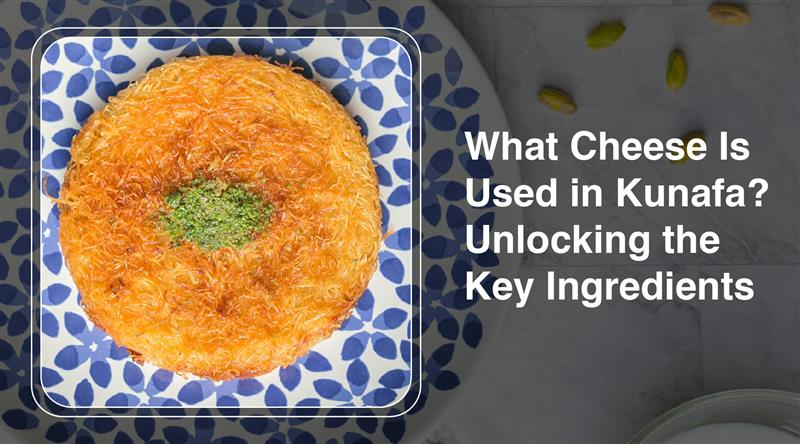
Wondering what cheese is used in kunafa? Akkawi, also spelled Akawi, and Nabulsi are traditional choices for cheese-filled versions. Mozzarella is also used in home recipes for its mild flavour and stretchy texture. The right choice depends on the style of kunafa you want to make and the ingredients available.
Kunafa combines a pastry crust, sweet syrup and a cheese or cream filling. This guide explains the main cheese options, how to prepare them and which ingredients to add to your shopping list.
What Cheese Is Used in Kunafa?
Akawi cheese is a traditional option for cheese kunafa. Nabulsi cheese is another choice, while mozzarella provides an accessible alternative for recipes that call for a stretchy filling.
Brined cheeses can be salty, so check your recipe and the cheese label before preparation. The aim is a filling that complements the sweet syrup rather than overpowering it.
Why Is Akawi Cheese Preferred for Kunafa?
Akawi is used in many kunafa recipes because its flavour and melting characteristics work well with the pastry and syrup.
- Flavour: Once appropriately desalted, it can complement the dessert’s sweetness.
- Texture: Suitable varieties contribute to a soft, melted filling.
- Traditional use: It appears in established cheese kunafa recipes, sometimes combined with mozzarella.
Results vary between cheese brands and recipes. Follow the preparation guidance for the specific cheese you buy.
Can I Use Mozzarella Instead of Akawi Cheese in Kunafa?
Yes. Mozzarella is used in kunafa recipes for its mild flavour and stretch. It produces a different flavour from Akawi, but can be a practical option when traditional cheese is unavailable.
Some recipes combine mozzarella with Akawi, ricotta or a separately prepared cream filling. Use a tested recipe for the proportions, as changing the cheese can affect moisture, texture and baking results.
What Other Cheeses Can Be Used in Kunafa?
- Nabulsi: A traditional cheese option that may require desalting.
- Ricotta: Used in recipes designed for a creamy filling rather than a pronounced cheese stretch.
- Cream cheese: An option in adapted recipes, producing a different texture from mozzarella or Akawi.
These cheeses are not interchangeable in every recipe. Choose the filling first, then follow a method developed for that cheese.
How Do I Prepare the Cheese for Kunafa?
- Check the saltiness: Brined Akawi or Nabulsi may need soaking before use.
- Desalt if required: Follow your recipe and the manufacturer’s guidance. Keep the cheese refrigerated while soaking and change the water as directed.
- Drain well: Excess water can make the pastry soggy.
- Prepare the filling: Slice, crumble or grate the cheese as your recipe specifies.
- Spread evenly: Distribute the filling across the pastry for consistent portions.
There is no single soaking time that suits every cheese. The starting salt level and thickness of the pieces affect the preparation needed.
Cheese Kunafa vs Cream Kunafa
Cheese kunafa uses a cheese filling and can have a stretchy texture. Cream kunafa uses a cream-based filling, often called ashta or eshta, and has a softer, creamy centre.
If your cream kunafa recipe calls for packaged cream, consider Puck sterilized cream 170g. Follow the recipe’s preparation steps: packaged cream is not automatically interchangeable with a prepared ashta filling.
Kataifi Pastry and Other Ingredients
Kataifi is a pastry made of fine strands, used for the crisp exterior in many kunafa recipes. It is not the same ingredient as semolina; other kunafa styles use a different crust preparation.
For a shredded-pastry version, explore Teeba kataifi pastry 400g. Depending on the recipe, you may also need butter or ghee, sugar, water and lemon juice for the syrup.
Some recipes flavour the syrup with a small amount of Cortas rose water 300ml. Use the quantity specified in your recipe to avoid overpowering the filling.
Tips for Making Perfect Kunafa
- Choose a tested recipe: Match the method to your cheese and pastry type.
- Drain the filling: Control excess moisture before assembling.
- Distribute the fat evenly: Follow the recipe when mixing butter or ghee into the pastry.
- Follow the syrup instructions: Recipes differ in the temperature and timing used when adding syrup.
- Serve as directed: Cheese versions are often enjoyed warm while the filling is melted.
Conclusion: Enjoy the Authentic Flavor of Kunafa
Knowing what cheese is used in kunafa helps you choose between a traditional Akawi or Nabulsi filling, a mozzarella variation or a cream-based version. Careful desalting, draining and recipe selection matter as much as the cheese itself.
Ready to Make Kunafa?
Build your ingredient list with Arabesque Akawi Cheese 400g, Teeba Kataifi 400g and any flavourings your recipe requires. Check product availability and review our UK mainland delivery information before ordering.
Taste Your Memories.
FAQs
What is cheese kunafa made of?
Many versions combine kataifi pastry, butter or ghee, a cheese filling and sugar syrup. The crust and filling vary by recipe.
Can I use mozzarella instead of Akawi cheese in kunafa?
Yes. Use a recipe designed for mozzarella, or a tested blend, to account for differences in flavour and moisture.
What other cheeses can be used in kunafa?
Nabulsi and ricotta are used in different recipes. Cream cheese appears in adapted versions, with a different result.
Why is Akawi cheese preferred for kunafa?
It is a traditional choice whose flavour and melting characteristics suit cheese-filled kunafa when prepared appropriately.
How do I prepare the cheese for kunafa?
Desalt brined cheese if required, drain thoroughly, then prepare and layer it according to your recipe.
Is cream kunafa the same as cheese kunafa?
No. Cream kunafa has a cream-based filling, while cheese kunafa uses cheese and may produce a stretchy centre.